
“I Didn’t Want to Complain. But Advocacy Left Me No Choice”
When Five Minutes of Breaktime Becomes a Safeguarding Issue: A SEND Parent’s Story
I Didn’t Want to Complain. But Advocacy Left Me No Choice
No parent ever does. We all know the labels that arrive the moment you stop smiling politely.
Difficult. Emotional. Overprotective.
(Usually delivered with a sigh and a clipboard.)
But here’s the thing about advocating for a neurodivergent child: once you see the pattern, you can’t unsee it. And once you can’t unsee it, staying quiet starts to feel like consent.
This wasn’t about one lost breaktime.
It was never about five minutes.
It was about a system that punishes children with ADHD and PDA for the very things they cannot switch off, then looks surprised when everything falls apart.
So I did the thing I swore I wouldn’t do.
I wrote the email.
Not the calm, well-rested, hypothetical email you imagine in your head. The real one. The one written with shaking hands, a thudding heart, and anxiety pacing the kitchen while I typed.
“This Is a Formal Complaint and Safeguarding Concern”
That was the opening line.
Not because I wanted drama but because what happened wasn’t safe.
In the email, I explained that staff decisions around behaviour management had resulted in my son leaving school so dysregulated that he had a 30-minute meltdown beside a busy road, with no awareness of danger, no ability to regulate, and no sense of risk.
That wasn’t a parenting failure.
It was a predictable outcome of removing an essential regulation strategy.
Why Removing Breaktime Fails Children With ADHD and PDA
Here’s what I set out, clearly and factually.
What happened:
My son lost five minutes of breaktime for sliding a water bottle across a table.
No warning.
No verbal prompt.
No reminder.
Just straight to consequence.
Why this mattered:
His Occupational Therapy report states clearly that:
His focus lasts around 10 minutes
He requires movement to regulate
Without movement, low-level behaviour escalates
Removing breaktime didn’t correct behaviour.
It created distress.
What made it worse:
This adjustment wasn’t new. The year before, it had been formally agreed with the SENCo that break and lunchtime would never be removed, because the risk of dysregulation was too high.
Yet in Year 2, that adjustment simply… disappeared.
Like it had expired.
Or been misplaced.
Or quietly ignored.
What I Said vs What I Meant
What I wrote:
Removing breaktime directly contradicts the OT recommendations and undermines Leonard’s ability to regulate and access learning.
What I meant:
If you take away the one thing that keeps him safe and regulated, you are actively making everything worse and then blaming him for it.

“This Is a Formal Complaint and Safeguarding Concern”
“We Followed the Behaviour Policy”
This was the justification.
Repeatedly.
Even after staff confirmed they had read the OT report.
Even after I explicitly instructed that very morning that breaktime must not be removed.
Even after it was acknowledged that the message had been received.
The behaviour policy was followed.
SEND law was not.
And here’s the bit that matters:
A behaviour policy cannot override the Equality Act.
It cannot override the SEND Code of Practice.
And it certainly cannot override a child’s safety.
Five minutes might sound small unless you understand regulation.
Unless you understand PDA.
Unless you understand what happens when a child is pushed past their limit and then sent out into the world.
The Quiet Harm Nobody Noticed
In the same email, I listed something else that had been quietly ignored.
My son’s vocal stimming.
I’d raised concerns three times.
They weren’t recorded.
They weren’t added to his support plan.
Instead, he was repeatedly told to stop. Shouted at. Corrected.
So he did what many children do when their body isn’t allowed to cope out loud.
He turned it inward.
The vocal stimming stopped and arm-biting began.
That’s not improvement.
That’s escalation.
And it happens when sensory needs are misunderstood or dismissed.
Why I Pressed Send Anyway
By the time I reached the end of the email, this wasn’t just about my son anymore.
It was about every child whose needs are invisible.
Every child whose distress is quiet.
Every child whose compliance is mistaken for coping.
Advocacy isn’t loud.
It doesn’t always look brave.
Sometimes it looks like typing through tears at midnight, wondering whether this will make things better or just harder. Sometimes it looks like hovering over “send” while your nervous system screams don’t rock the boat.
But agency matters.
Because if I don’t speak, the story becomes theirs. And theirs alone.
This Is What SEND Advocacy Really Looks Like
This ‘this’ is what fighting for SEND children looks like when you’re emotionally wrung out. When you’re hitting brick walls disguised as support plan meetings. When reasonable adjustments exist beautifully on paper but mysteriously fail to cross the classroom threshold.
It isn’t polished.
It isn’t comfortable.
And it isn’t optional.
Because when a system fails a child, silence isn’t neutrality.
It’s permission.
And I’m done giving that.
“What Parents Can Learn From This”
If you’re reading this and thinking “I could have written this”, you’re not alone. And more importantly you’re not overreacting.
Here are the things I wish someone had told me earlier:
1. Behaviour Is Communication. Especially for SEND Children
Low level behaviour in children with ADHD or PDA is often a sign of unmet regulation needs, not defiance. Punishing the behaviour without meeting the need will always escalate things.
2. Breaktime Is Not a Privilege for Neurodivergent Children
For many SEND children, movement is essential for:
Emotional regulation
Focus
Safety
Removing break or lunchtime is not a neutral consequence it can be actively harmful.
3. Reasonable Adjustments Must Be Followed in the Classroom
Adjustments that exist only:
In meetings
On paperwork
Or “in theory”
are not reasonable adjustments. They must be applied day to day, across academic years, and by all staff.
4. Behaviour Policies Do Not Override SEND Law
Schools are legally required to make reasonable adjustments under:
The Equality Act 2010
The SEND Code of Practice
A behaviour policy cannot be applied rigidly where it disadvantages a disabled child.
5. Quiet Compliance Is Often Misread as Coping
Children who internalise distress may appear “fine” until they’re not. Suppressing stimming or sensory needs can lead to anxiety, meltdowns, or self-harm behaviours later on.
6. Advocacy Doesn’t Mean You’re Difficult
Complaining does not make you emotional.
Raising safeguarding concerns does not make you dramatic.
Asking for legal duties to be followed does not make you unreasonable.
It makes you a parent protecting your child.
While I’m still waiting for an official response to the complaint (apparently “before Christmas” exists in a parallel universe), Part 4 will have to wait.
So instead, come back next week for more Midlife Madness, where I’ll be writing about something we can actually control: reducing demands how to lower the pressure, create breathing space, and support your child’s needs without burning yourself out in the process.
If you’ve laughed, nodded, or felt a little less alone reading this, you can click the “Buy Me a Coffee” button below to help fuel the writing (and possibly a new laptop that doesn’t sound like it’s about to emotionally shut down).
Only 1 donation so far but hope springs eternal, caffeine helps, and I’ll keep showing up regardless. ☕💛
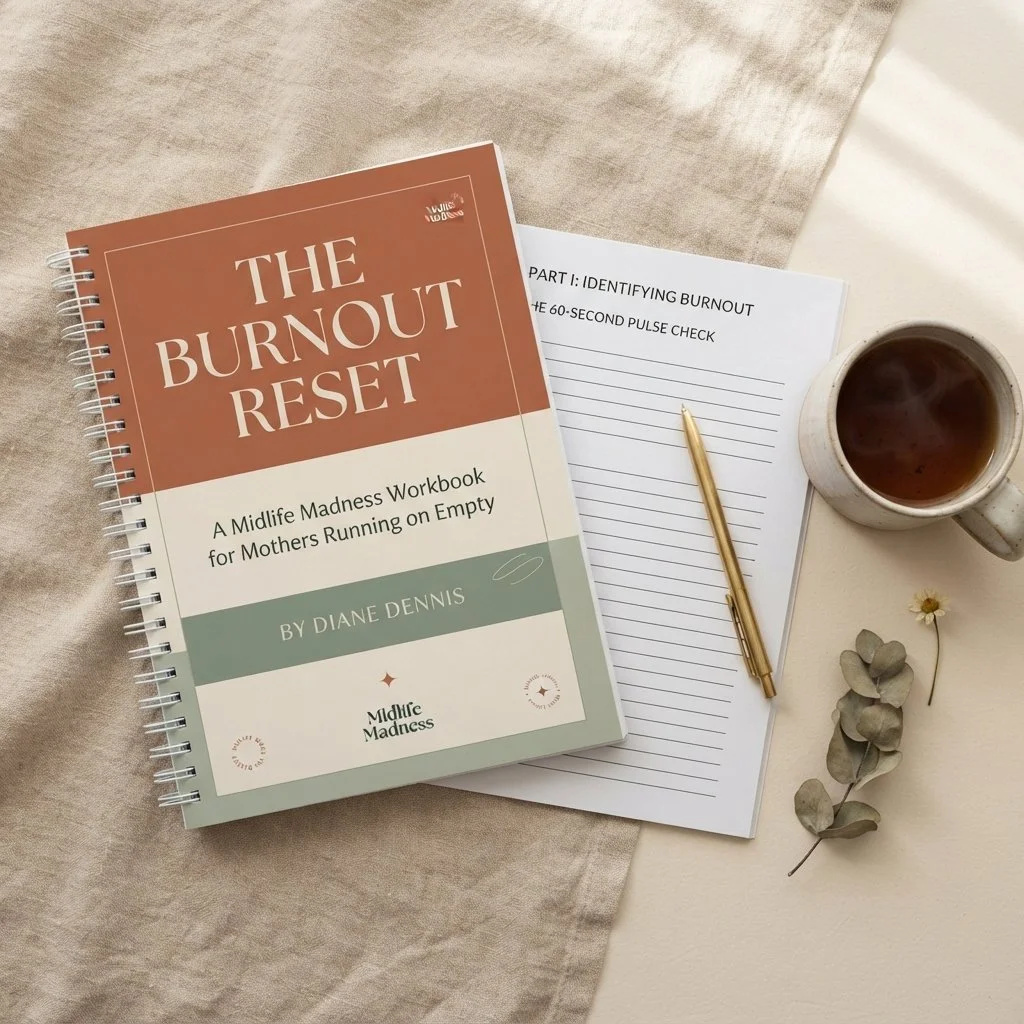
Full Product Description:
You don’t need another 5:00 AM morning routine or a lecture on drinking more water. You need permission to put the heavy stuff down.
If you are navigating midlife, motherhood, neurodivergent advocacy, or simply years of holding everyone else together while quietly falling apart yourself, this workbook was written for you.
Created by Diane Dennis (Midlife Madness), The Burnout Reset skips the toxic positivity and fluffy gratitude lists. Instead, it gives you 10 clean, structured A4 pages designed to help you clear the mental fog, audit where your energy is actually going, and figure out who you are underneath all the roles you carry.
What’s Inside Your 10-Page A4 Workbook:
The 60-Second Burnout Pulse Check: A quick, honest self-diagnostic to measure where your nervous system actually is today (no judgement, just clarity).
Part I: Identity & Permission Slips: Deep journal prompts to separate who you are from what you do for everyone else, including signable Midlife Permission Slips to stop over-explaining and start becoming the "difficult" woman when it matters.
Part II: Self-Worth & Rewriting Burnout Scripts: Unpack recovering perfectionism, invisible labour, and false guilt with a guided Old Script vs. New Truth reframing exercise.
Part III: Rediscovering Midlife Purpose: Use your "sacred anger" and quiet sparks of curiosity to figure out what actually lights your pilot light again, without adding a single chore to your to-do list.
Part IV: The 6-Pillar Life Audit & Action Plan: Pinpoint your biggest energy leaks across parenting, home, relationships, and work, build your Stop, Drop & Protect list, and use copy-and-paste boundary scripts for days when your brain is too fried to find the words.
How It Works:
Instant Download: Access your high-resolution A4 PDF immediately after checkout.
Print or Use Digitally: Print it out with a cup of tea (or cold coffee) and a pen, or annotate it on your iPad/tablet in GoodNotes or Notability.
Zero Pressure: Work through it in one quiet evening or one page a week. No streaks, no gold stars, no failing.
Love,
Diane x
PS: Still figuring it out, still winging it. Still recovering from the moment the teacher said:
“He still went outside… it’s not like it happens all the time.”
Me internally: Yes, Karen, because a dysregulated meltdown beside traffic is just a quirky Year 2 hobby, clearly. But hey, we’re doing our best! And that’s enough for me.